
Evidence standard: This article distinguishes public records, company claims and editorial assessment. Information may change after publication.
One brand can represent several regulated entities
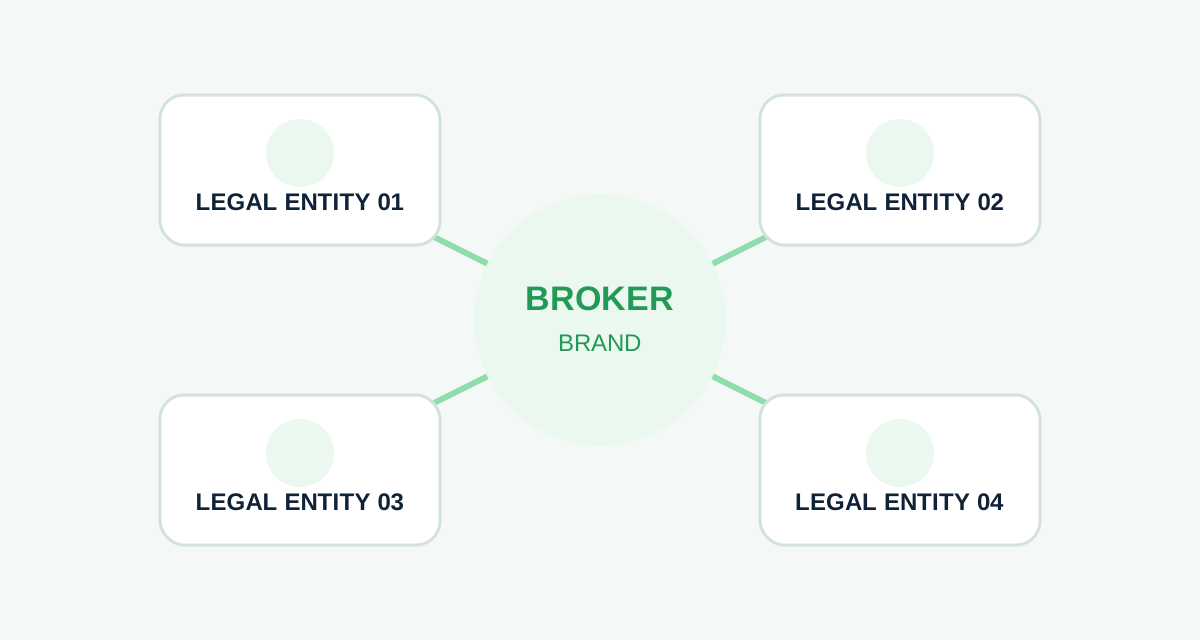
Large trading brands commonly maintain companies in several jurisdictions. The brand may look identical across regional websites, while the company named in the account agreement, client-money terms and complaints process can change. This is why a platform should display licences at legal-entity level instead of presenting regulation as a single brand-wide badge.
Where to find the contracting entity
- The account-opening confirmation and client agreement
- The website footer and legal-document selector
- The deposit recipient or payment descriptor
- The regulator record linked to the exact licence number
- The complaints and governing-law clauses
| Area | Why the entity changes the answer |
|---|---|
| Maximum leverage | Retail limits differ by jurisdiction and classification |
| Client-money rules | Segregation and reporting requirements are not uniform |
| Compensation | Eligibility and limits depend on the entity and scheme |
| Complaint route | Ombudsman or regulator channels differ |
| Product access | Some instruments are restricted in particular markets |
Make the entity visible in every comparison
A useful broker comparison should list the company name, country, licence number, approved domain and last verification date together. If any field remains unresolved, the record should say so plainly. REGULENS scores do not replace an official register check and should be read alongside the underlying sources.
Sources and verification links
Sources were available to the editorial team on the recorded check date. External records may change.
FXTM legal and regulatory disclosuresbroker · verified · checked Jul 19, 2026XM regulation disclosurebroker · verified · checked Jul 19, 2026IC Markets Global regulation disclosurebroker · verified · checked Jul 19, 2026